Lies, Damned Lies, and One Very Misleading Statistic https://t.co/nT0MyCdfb4— Arwa Damon (@arwaCNN) March 4, 2018
Showing posts with label sexual assault. Show all posts
Showing posts with label sexual assault. Show all posts
Sunday, March 4, 2018
Wednesday, December 13, 2017
How @nytimes reporters Megan Twohey (@mega2e) and @jodikantor broke Hollywood’s biggest sexual harassment story https://t.co/5MZC2oWjjT #HollywoodUncovered pic.twitter.com/4fddUQLAbQ— Variety (@Variety) December 13, 2017
....
Did you have any idea that the Weinstein reporting would open the floodgates on other stories of powerful media figures engaging in sexual abuse?
Kantor: It’s counterintuitive. One of our editors said to us, “You know he’s not that famous.” It was true, because Weinstein was Hollywood famous, but he wasn’t a household name. One of our editors, Matt Purdy, has an interesting theory, which is that this was the rare situation in which the accusers were more famous than the accused.
I’m of two minds about the potency of fame in making this story impactful. On one hand, I kind of resist and resent it, because I believe every woman’s story counts. Harvey Weinstein appears to have done the same thing to a lot of women regardless of their stature in the industry. As a journalist and as a human being, I don’t like the idea of weighting the more famous women’s stories more heavily than the lesser-known women’s stories. That said, I have to concede that the impact of big stars like Ashley Judd, Angelina Jolie and Gwyneth Paltrow going on the record was enormous, in part because they were saying it’s not shameful to tell your story. I ask myself would it have played out the same way if the really famous women had not come forward? I’m not sure it would have.

Tuesday, March 26, 2013
Congo 4
Activists showed Angelina Jolie a picture of a 5 yr old raped by Congolese army next to police station. She told me "that's why we're here"
— Cathy Newman (@cathynewman) March 26, 2013


USWeekly
Celebrity News March 26, 2013 AT 5:30PM
Did Brad Pitt and Angelina Jolie
manage to pull off the impossible -- a secret wedding in Hollywood?
During a trip to a rescue camp in the Democratic Republic of Congo this
week, Pitt's 37-year-old fiancee was spotted with some mysterious new
bling on her ring finger: a simple gold band where her giant platinum
engagement sparkler used to be.
PHOTOS: Brad and Angelina's PDA
The Maleficent actress and special envoy of the United Nations' refugee agency is currently in Africa with British Foreign Secretary William Hague to raise awareness of warzone rape in the Congo and Rwanda. On Monday, March 25, she visited a rescue camp to meet with survivors of sexual violence.
Jolie, who has six kids with longtime love Pitt, pledged last year to devote more time to her humanitarian work. "I wake up in the morning as a mom, and I turn on the news like everybody else, and I see what's happening," she said. "I want to be part of the world in a positive way."
PHOTOS: Angelina goes global
The star noted that her family played a large part in her desire to help others. She and Pitt adopted three of their children from other countries and have made a concerted effort to stay connected to those cultures.
And to each other, of course. Last spring, after seven years together, the World War Z actor popped the question with a ring he designed himself -- an emerald-cut diamond surrounded by smaller diamonds, estimated to be around 16 carats total and worth approximately $500,000.
PHOTOS: How Brad and Angie fell in love
The A-list couple had said previously that they wouldn't wed until the ban on gay marriage was reversed, but in January 2012, Pitt hinted that they had changed their minds. "We'd actually like to," he told The Hollywood Reporter of tying the knot, "and it seems to mean more and more to our kids."
"We made this declaration some time ago that we weren't going to do it till everyone can. But I don't think we'll be able to hold out," he continued. "It means so much to my kids, and they ask a lot. And it means something to me, too, to make that kind of commitment."
PHOTOS: Brad and Angelina's PDA
The Maleficent actress and special envoy of the United Nations' refugee agency is currently in Africa with British Foreign Secretary William Hague to raise awareness of warzone rape in the Congo and Rwanda. On Monday, March 25, she visited a rescue camp to meet with survivors of sexual violence.
Jolie, who has six kids with longtime love Pitt, pledged last year to devote more time to her humanitarian work. "I wake up in the morning as a mom, and I turn on the news like everybody else, and I see what's happening," she said. "I want to be part of the world in a positive way."
PHOTOS: Angelina goes global
The star noted that her family played a large part in her desire to help others. She and Pitt adopted three of their children from other countries and have made a concerted effort to stay connected to those cultures.
And to each other, of course. Last spring, after seven years together, the World War Z actor popped the question with a ring he designed himself -- an emerald-cut diamond surrounded by smaller diamonds, estimated to be around 16 carats total and worth approximately $500,000.
PHOTOS: How Brad and Angie fell in love
The A-list couple had said previously that they wouldn't wed until the ban on gay marriage was reversed, but in January 2012, Pitt hinted that they had changed their minds. "We'd actually like to," he told The Hollywood Reporter of tying the knot, "and it seems to mean more and more to our kids."
"We made this declaration some time ago that we weren't going to do it till everyone can. But I don't think we'll be able to hold out," he continued. "It means so much to my kids, and they ask a lot. And it means something to me, too, to make that kind of commitment."
Rwanda
Attempting chopper take-off with Angelina Jolie and @williamjhague . Flying round the storm apparently.
— Cathy Newman (@cathynewman) March 26, 2013
William Hague and Angelina Jolie visit Kigali Memorial to honour victims of Rwanda’s 1994 genocide

26 Mar 13 - UK Foreign Secretary William Hague and UNHCR Special Envoy Angelina Jolie this morning visited the Kigali Genocide Memorial in Rwanda’s capital to honour the memory of all those murdered in Rwanda’s 1994 genocide.
The Memorial was established in 2004 by the UK-based Aegis Trust for genocide prevention, working in partnership with survivors and the Rwandan authorities. Today it plays a key role in peace-building education, bringing together children of survivors and perpetrators to help strengthen community stability and resilience against the potential for violence in the future. The British Government is looking to support that work, which was profiled in the Guardian last week. Aegis also provides essential support to survivors of the genocide in greatest need; orphans, widows and gang-rape victims among them.
In just a 100 days, from April to July 1994, a million Rwandans were murdered simply because they were identified as ethnically Tutsi. UN peacekeepers were in Rwanda at the start of the genocide, but instead of being reinforced and mandated to stop the killing, much of the force was withdrawn. It has come to be regarded as one of the international community’s worst failures in modern times to protect people at risk of mass atrocities.
Some 250,000 of those killed lie in mass graves at the Kigali Genocide Memorial, where William Hague and Angelina Jolie placed wreaths and stood in silent reflection.
They were visiting the Memorial ahead of a journey to the D.R. Congo, where they will highlight the terrible human cost of warzone rape, meeting survivors and calling for Governments worldwide to address this neglected and growing problem.
Before leaving the memorial, Hague and Jolie viewed Aegis' documentation programme, the Genocide Archive of Rwanda. Its work includes documentation of rape and violence against women. Yves Kamuronsi, Archive Manager, explained how Rwandans and researchers from around the World will use the archive to better understand the causes genocide, using this research and evidence to inform upstream prevention strategies such as community reconciliation processes and social cohesion to promote stability.
"The Aegis Trust was honoured to host Mr Hague and Ms Jolie on their visit to the Kigali Genocide Memorial today. Survivors across the country will be encouraged by their commitment to prevent mass atrocities," says Freddy Mutanguha, Head of Country for Aegis in Rwanda and himself a survivor of the genocide.
"Used as a weapon of genocide in Rwanda, we have observed how trauma and other consequences of rape last for generations,” says Dr James Smith, Chief Executive of the Aegis Trust. “Rape often occurs in times of conflict; the perpetrators exert domination by targeting women. We applaud William Hague and Angelina Jolie for their efforts to bring renewed international attention and to seek better ways to safeguard women in times of crisis.”
The Aegis Trust aims to prevent genocide worldwide. By joining Aegis, you can help this important work to continue: http://support.aegistrust.org/joinus/
Picture of the Day: Angelina #Jolie pays her respects to the victims of the 1994 Genocide against the #Tutsi. #Rwanda twitter.com/NewTimesRwanda…
— The New Times (@NewTimesRwanda) March 26, 2013


Angelina Jolie who nicely paused with Pearl Lounge staff members...Here with Ange s1156.photobucket.com/user/pearlloun…
— Pearl Lounge Kigali (@PearlLoungeKGL) March 26, 2013


Dozens of #Rwandan journalists frustrated at #Kigali memorial center after being denied to interview #Angelina Jolie. Why did they invite us
— Richard Kwizera (@Muzungu4) March 26, 2013
FCO Storify

FCO
William Hague and Angelina Jolie visit Rwanda
The UK Foreign Secretary and UNHCR Special Envoy arrived in Kigali
on 24 March at the beginning of a visit to Rwanda and the DR Congo.
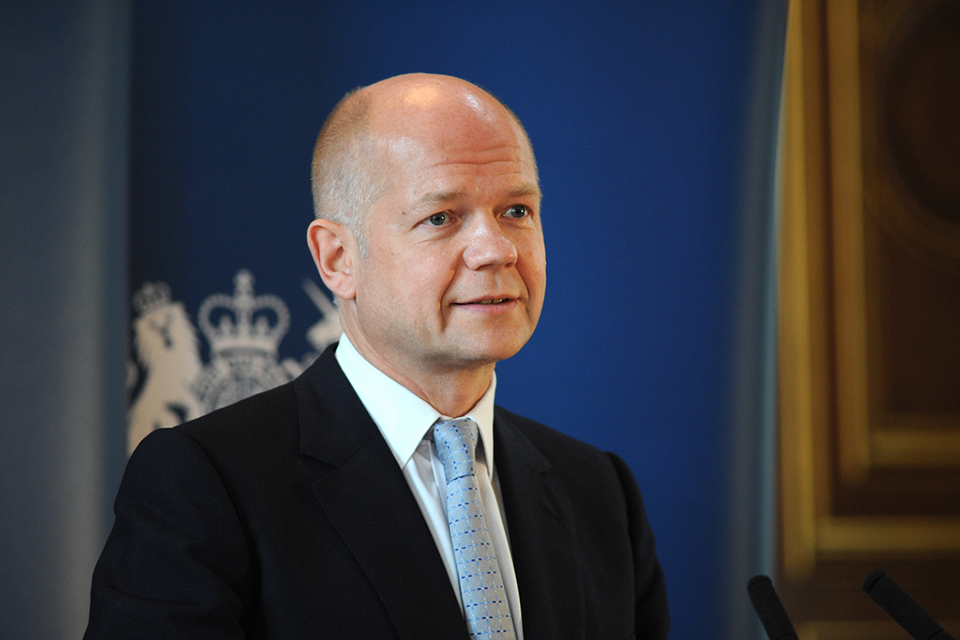
The UK is determined to work closely with countries including Rwanda and the DRC to deliver a durable solution to the current conflict, for regional stability.
Monday, March 25, 2013
Congo videos
25 March 2013
The challenge of ending warzone rape
Foreign Secretary William Hague and film star turned UN envoy Angelina Jolie have jointly launched a campaign to end warzone rape but, as Cathy Newman writes, there are many obstacles in the way.
On the bumpy, dirt track which passes for a main road
out of Goma, the crowds of Congolese don't even look up when the UN
armoured convoy rumbles by.
They're so used to seeing it that it's no longer noteworthy.
The UN and an assortment of charities have been in the Congo for years to try and protect a people whose lives have been torn apart by decades of fighting.
Since 1998, the war has claimed 5.4m lives, and official estimates suggest 200,000 women have been raped during the conflict.
And even though there's a peace agreement of sorts, the violence and rape go on.
I'm travelling with the foreign secretary and the Hollywood film star turned UN envoy Angelina Jolie - who have jointly launched a campaign to end warzone rape - an atrocity which, William Hague says, shames the world.
Despite the incredible mineral wealth of the Congo - gold, diamonds and coltan, which is sought-after to make mobile phones - in the east of the country particularly its people live in daily danger and grinding poverty.
By the side of the road we're jolting along, women are selling anything they can - fruit and nuts balanced in giant baskets on their heads, vegetables, mobile phone covers, baseball caps. Men push home-made bikes hewn from tree trunks and laden with produce, and tiny children carry even tinier babies.
Without saying a word, a boy in a thread-bare red cross t-shirt emblazoned with a red cross seems to say it all. Their trust in the protection of charities and the international community has worn thin over the years.
The International Rescue Committee which runs the Nzolo camp is trying to stop women endangering themselves by giving them stoves so they don't have to collect wood.
But despite its best efforts conditions for the ten thousand people who call this place home are pretty hellish.
The makeshift shelters are no protection against the rain, and it's a breeding ground for insect-borne diseases.
One of the women told me a baby recently died because there are no ambulances to take people who fall sick to hospital.
In a camp just up the road another woman said she'd been raped in the camp itself. That was the second time she'd been attacked.
She was prepared to stand up in court to see her attackers punished. But she doubted she could recognise them well enough to identify them.
And that's the kind of challenge Mr Hague's initiative faces. For women facing a daily struggle for food and survival, bringing rapists to justice is without doubt a laudable aim, but in a country broken by decades of war, there are many obstacles in the way.
They're so used to seeing it that it's no longer noteworthy.
The UN and an assortment of charities have been in the Congo for years to try and protect a people whose lives have been torn apart by decades of fighting.
Since 1998, the war has claimed 5.4m lives, and official estimates suggest 200,000 women have been raped during the conflict.
And even though there's a peace agreement of sorts, the violence and rape go on.
I'm travelling with the foreign secretary and the Hollywood film star turned UN envoy Angelina Jolie - who have jointly launched a campaign to end warzone rape - an atrocity which, William Hague says, shames the world.
Despite the incredible mineral wealth of the Congo - gold, diamonds and coltan, which is sought-after to make mobile phones - in the east of the country particularly its people live in daily danger and grinding poverty.
By the side of the road we're jolting along, women are selling anything they can - fruit and nuts balanced in giant baskets on their heads, vegetables, mobile phone covers, baseball caps. Men push home-made bikes hewn from tree trunks and laden with produce, and tiny children carry even tinier babies.
Without saying a word, a boy in a thread-bare red cross t-shirt emblazoned with a red cross seems to say it all. Their trust in the protection of charities and the international community has worn thin over the years.
The challenges ahead
We're on our way to a camp for displaced people near Goma. It's supposed to afford some protection and the families living here are grateful that it does. But they also say they're at risk of being raped if they leave the camp to find food or firewood for cooking.The International Rescue Committee which runs the Nzolo camp is trying to stop women endangering themselves by giving them stoves so they don't have to collect wood.
But despite its best efforts conditions for the ten thousand people who call this place home are pretty hellish.
The makeshift shelters are no protection against the rain, and it's a breeding ground for insect-borne diseases.
One of the women told me a baby recently died because there are no ambulances to take people who fall sick to hospital.
In a camp just up the road another woman said she'd been raped in the camp itself. That was the second time she'd been attacked.
She was prepared to stand up in court to see her attackers punished. But she doubted she could recognise them well enough to identify them.
And that's the kind of challenge Mr Hague's initiative faces. For women facing a daily struggle for food and survival, bringing rapists to justice is without doubt a laudable aim, but in a country broken by decades of war, there are many obstacles in the way.
If you missed my interviews with @williamjhague on Syria and Angelina Jolie on warzone rape you can watch here bit.ly/15LJrb4
— Cathy Newman (@cathynewman) March 25, 2013
William Hague & Angelina Jolie arrived @ 15h45 at Goma airport, want to a camp w/ IRC and r now on their way back to Kigali
— Melanie Gouby (@Melaniegouby) March 25, 2013

Angelina Jolie visits DRC to raise awareness of rape in warzones
Angelina
Jolie joins British Foreign Secretary William Hague talk to women in
DRC about rape being used as weapon of war. Rough Cut (no reporter
narration).
Reuters video
Video
Jolie and Hague visit Africa for anti-rape campaign from ITV News on Vimeo.

mikeyhoare
Mikey Hoare
Good photo of Foreign Secretary and Angelina Jolie at Nzolo IDP camp in eastern DRC pic.twitter.com/QsvQYxGadC

BBC
25 March 2013 Last updated at 22:25 GMT
Hollywood actress Angelina Jolie and Foreign Secretary
William Hague have teamed up in the Democratic Republic of Congo to
highlight concerns over sexual violence.
The pair visited a rescue camp for women north west of Goma to raise awareness of warzone rape.
The foreign secretary said: "Sexual violence in conflict has to be resolved if conflicts are going to be resolved."
Jolie, a special envoy for the United Nations High Commissioner, said the issue needed a "worldwide focus".
James Robbins reports.
BBC video at site
The pair visited a rescue camp for women north west of Goma to raise awareness of warzone rape.
The foreign secretary said: "Sexual violence in conflict has to be resolved if conflicts are going to be resolved."
Jolie, a special envoy for the United Nations High Commissioner, said the issue needed a "worldwide focus".
James Robbins reports.
BBC video at site


Telegraph
Angelina Jolie and William Hague visit Congo on anti-rape mission
The Hollywood actress and British Foreign Secretary visit a refugee camp in the Democratic Republic of Comgo as part of campaign to stop rape being used as a tool of war.
10:26PM GMT 25 Mar 2013
Hollywood actress Angelina Jolie, a special envoy for the UN refugee agency,
travelled to the Nzulo camp near Goma on Monday along with Foreign Secretary
William Hague.
The visit to the Nzolo IDP camp north of Goma, was intended to highlight the
use of rape in conflict zones, and to raise awareness of the issue on an
international level.
"What we're here to do is try to scale it up and make this a world wide focus
and it's due time, it's been going on every war, every crisis and it's often
an afterthought and it's due time to end this and put an end to impunity and
they deserve it," Jolie said.
Mr Hague said that he planned to raise the problem at the annual G8 meeting of
foreign ministers in London in April.
"Sexual violence in conflict has to be resolved if conflicts are to be
resolved because when rape is used as a weapon of war, it makes communities
harder, to bring together and much harder for people to get on with their
lives afterwards," he said.
The International Rescue Committee (IRC) says it's provided care to more than 2,500 women and girls who have been raped or abused over the last year alone.
The IRC is handing out kits with flashlights and whistles, as well as cleaning products so that women can avoid bathing at creeks where the risk of assault is higher.
Sexual violence is frequently used as a weapon of war by rebel groups that operate in eastern Congo, as well as by Congolese soldiers.
A somewhat unlikely duo, the Foreign Secretary and the actress launched the campaign in May 2012 to prevent sexual violence in conflict zones.
The International Rescue Committee (IRC) says it's provided care to more than 2,500 women and girls who have been raped or abused over the last year alone.
The IRC is handing out kits with flashlights and whistles, as well as cleaning products so that women can avoid bathing at creeks where the risk of assault is higher.
Sexual violence is frequently used as a weapon of war by rebel groups that operate in eastern Congo, as well as by Congolese soldiers.
A somewhat unlikely duo, the Foreign Secretary and the actress launched the campaign in May 2012 to prevent sexual violence in conflict zones.
Telegraph video at site
ITN
Photo: The Foreign Secretary and Angelina Jolie visit Nzolo camp tmblr.co/ZAl3fwh9aPlT
— paula carvalho (@SeevSykes) March 26, 2013


Reuters
IRC
William Hague and Angelina Jolie meet uprooted women in Eastern Congo kept safe by International Rescue Committee
NORTH KIVU PROVINCE, Democratic Republic of Congo – The British Foreign Secretary, William Hague, and actress and UNHCR Special Envoy, Angelina Jolie, visited a displacement camp in Eastern DRC today (Monday 25 March) to see how the International Rescue Committee (IRC) is preventing violence against women and girls vulnerable to physical and sexual abuse.Mr Hague and Ms Jolie met with IRC staff and displaced women at Nzulo camp near Goma, the provincial capital of North Kivu. The camp supports over 10,000 of the estimated 218,000 people currently displaced in the area over the past year.
The spontaneous displacement sites and camps around Goma are often not a safe refuge for women and girls, especially as they collect firewood or water, try to find assistance to support themselves and their families, or walk around at night time.
To help prevent violence to women and girls the IRC has distributed 12,000 ‘dignity kits’ in six camps and displacement sites near Goma in recent months. The kits include clothing, several sets of underwear, strips of reusable cloth for sanitary towels, bars of soap and two buckets; one for washing clothes and the other for washing themselves.
These simple items allow women to wash in private rather than risk physical or sexual violence while at communal and unprotected creeks. To reduce the risk at night-time, the kits also include torches and whistles. To reduce the amount of time women and girls spend collecting firewood, the IRC will begin distributing 2,500 fuel efficient stoves in April.
Violence against women and girls is an ever present threat in the DRC but the armed conflict and displacement over the past year have further exacerbated the problem. Over the past 12 months the IRC has provided life-saving care to more than 2,500 women and girls who have been raped or abused.
The IRC has seen a marked increase in violence against women and girls in North and South Kivu, peaking in September, when the number of cases reported was 190 per cent higher than the 2011 monthly average. (1)
Women reported to the IRC rape, physical assault, forced marriage and other forms of abuse. The teams discovered that while there was an increase in cases perpetrated by a stranger, in 45 per cent of the cases the perpetrator was someone known to the woman, typically a family member, partner or someone from the local community.
Protecting women and girls from violence is a core part of the IRC’s emergency response. Seven dedicated teams provide lifesaving care to women and girls. As well as counselling and medical advice, survivors are given ‘post-rape kits’, consisting of antibiotics, antiretroviral drugs to prevent HIV infection, and emergency contraception.
Elinor Raikes, the IRC’s Deputy Regional Director in DRC, said: “Women and girls have been on the frontline of the crisis in Congo for too long and the recent conflict has put them at even more risk from sexual and physical violence. Violence against women and girls takes place in every conflict, which is why it is essential to prevent abuse in the first place and support survivors as they resume their role as leaders within their families and communities.”
The IRC is also providing emergency delivery kits to visibly pregnant women in three camps around Goma to ensure women are able to deliver their babies safely even if they are unable to reach a health centre. By the end of March the IRC will also have renovated 46 schools in North Kivu, which were damaged by fighting and looting.
The IRC has been operating in the region since 1996 and is currently the largest aid and development organisation in the Kivus, reaching an estimated 1.8 million people. Current IRC current programmes focus on emergency assistance, healthcare, women’s protection and empowerment, education and strengthening communities’ capacity for recovery
Contact:
Paul Donohoe (London) +44 (0)20 7692 2727/ 07779 624 385/ Paul.Donohoe@rescue-uk.org
Sinziana Demian (Goma) +243 (0)995 200 516/ Sinziana.Demian@rescue.org
NOTE TO EDITORS: For more information, field visits, or interviews with experts on this issue, please contact the IRC staff above and follow @IRCUkNews for updates.
1. Based on caseload of women and girls using IRC services.
About the International Rescue Committee: A global leader in humanitarian assistance for 80 years, the International Rescue Committee responds to the world’s worst crises and helps refugees and others uprooted by conflict, disaster and persecution to survive and rebuild their lives. At work in more than 40 countries, the IRC works to restore safety, hope, opportunity and dignity.
The IRC is recognised globally as a leader in preventing and responding to violence against women. In emergencies the IRC delivers urgent care for victims of assault and in longstanding crises we provide safe places for women. In the aftermath of war, the IRC addresses the root causes of violence against women by helping them gain greater economic independence and play a more meaningful role in decision-making. Last year International Rescue Committee supported 16,000 survivors of gender based violence across the world.
Sunday, March 24, 2013
Congo + Hague
Foreign Office Press Release


The UK Foreign Secretary and UNHCR Special Envoy Angelina Jolie
call on the world to act to eradicate sexual violence in conflict
On a visit to the Democratic Republic of Congo and Rwanda they will meet survivors of rape and sexual violence and the local organisations and UN bodies supporting them. They will also meet political leaders to discuss the need for a lasting solution to the conflict.
Speaking ahead of the visit, Foreign Secretary William Hague said:
UNHCR Special Envoy Angelina Jolie said:Rape is often used as a weapon of war in conflict zones around the world. It destroys people’s lives and communities in the most horrific manner imaginable. Yet more often than not the international community looks away, the perpetrators of these brutal crimes walk free and the cycle of injustice and conflict is repeated. We have to shatter this culture of impunity. It is time for real, meaningful action by the Governments of the world to say that the use of rape as a weapon of war is unacceptable, to bring perpetrators to justice and to lift the stigma from survivors. This is my personal priority for the meeting of G8 Foreign Ministers in London in April and at the UN later this year.
The joint visit continues work begun in May 2012, when William Hague and Angelina Jolie launched in London a new UK campaign to prevent conflict zone rape and sexual violence.This visit is about hearing first hand from people who have endured rape and sexual violence during the conflict in the Eastern DRC. We want to identify ways in which the international community can help them to rebuild their lives. We want to learn the lessons that their experience holds for how the world can protect thousands of women, men and children at risk of rape in many other conflict zones. And we want to persuade Governments around the world to give this issue the attention it deserves. Unless the world acts, we will always be reacting to atrocities, treating survivors rather than preventing rape in the first place. I welcome the United Kingdom’s efforts to galvanise the international action that is so desperately needed.
The visit comes three weeks before the Foreign Ministers of the United Kingdom, the US, France, Canada, Japan, Germany, Russia and Italy gather in London for the annual meeting of the G8.
William Hague and Angelina Jolie are calling on the G8 to agree landmark measures to secure justice for survivors of sexual violence and deter perpetrators. These include a new International Protocol on the Documentation and Investigation of Rape and Sexual Violence, agreement that rape and sexual violence constitute grave breaches of the Geneva Convention so that universal jurisdiction can apply, and practical commitments to help affected countries.
As a UNHCR Special Envoy, Angelina Jolie has highlighted the plight of refugees worldwide for over a decade. Her 2011 film ‘In the Land of Blood and Honey’ depicted the experiences of women in the infamous rape camps set up during ethnic cleansing in Bosnia-Herzegovina, and was a catalyst for the UK Initiative.
Further information
-
Accurate statistics on the extent of sexual violence in
conflict-affected countries are notoriously difficult to obtain but
every year tens of thousands of women, men and children are victims of
these horrific crimes. A War Child report (An Unwanted Truth, November
2012) reported that in 2012 74% of sexual violence survivors treated at
the HEAL Hospital in Goma were children.
-
As part of the Preventing Sexual Violence Initiative, the UK has
set up a groundbreaking team of over 70 experts, made up of doctors,
lawyers, police officers, psychologists and forensic scientists, who can
be deployed overseas, in support of the UN or at the request of
national governments, to investigate cases of sexual violence and build
up the legal and practical capability of other countries.
-
This year team members will be sent to Syria’s borders, Mali,
Libya, Bosnia-Herzegovina, South Sudan and the DRC to provide training
and help investigate cases of rape and sexual violence to support future
prosecutions.
-
After the G8, the campaign will be taken to the UN Security Council in June and to the UN General Assembly in September.
- Organisation:
- Published:
- 25 March 2013
- Policies:
- Minister:
- The Rt Hon William Hague MP
- World location:
@williamjhague & UNHCR Special Envoy Angelina Jolie call on world to act to eradicate #sexualviolence in #conflict ow.ly/jn9X2
— Foreign Office (FCO) (@foreignoffice) March 25, 2013
Wednesday, November 14, 2012
Hague - Wilton Park
 All rights reserved by Wilton Park dialogues
Wilton Park Flickr photostream
click to see full size


Foreign Secretary and Special Envoy to the UN High Commissioner on Refugees

Foreign Secretary William Hague with Special Envoy to the UN High
Commissioner on Refugees, Ms Angelina Jolie at the a Wilton Park
Conference on 'Preventing sexual violence in conflict and
post-conflict situations', 14 November 2012.

Photos from FCO Flickr photostream


William Hague
At @WiltonPark with UNHCR envoy Angelina Jolie, delighted by her support for our initiative on stopping rape in war pic.twitter.com/jHCRRpxS

Alison Holder
My husband is suddenly taking more interest in my work since I mentioned that I was at a conference with Angelina Jolie
From the FCO, UK
Confronting rape as a weapon of war: a challenge for our generation
14 November 2012Foreign Secretary William Hague's keynote address at the "Preventing sexual violence in conflict and post-conflict situations" meeting at Wilton Park.


Each generation faces its own challenges, and each can shape our world for the better.
Our generation has the opportunity, and the responsibility, to confront the use of rape and sexual violence as a weapon of war.
In our lifetimes millions of women, children and men have endured this horror, including in Rwanda, the Democratic Republic of Congo, Colombia, Uganda, Liberia and in Bosnia, where only twenty years ago, on European soil, rape camps were set up and tens of thousands of women subjected to sexual slavery and enforced pregnancy.
I believe that preventing and addressing sexual violence is vital to resolving conflicts and building sustainable peace. I see it as a vast international issue that national foreign policies have not yet adequately addressed. And I am convinced that we can actually do something more about it. That is why I am championing it as Foreign Secretary.
While my Party was still in Opposition I met survivors of rape in refugee camps in Darfur and in Srebrenica. Last month I returned to Bosnia and spent time with female and male survivors in Sarajevo, and I recently shared a platform with people working with survivors of rape and torture in the DRC.
These experiences brought home to me the sheer extent and intensity of the problem, the overwhelming lack of justice for survivors of wartime rape and sexual violence despite a huge amount of excellent work by grassroots organisations and NGOs, and the direct link that this has with peace and security today. Where there is no justice or dignity for survivors development is held back, and the seeds of future conflict are sown.
I approach this subject with a good deal of humility, as a man, and as someone who has not experienced conflict first hand or worked with survivors. But I have been appalled by the toll sexual violence in conflict has on children. To take just one example, of the thousands of reported rapes in the DRC in one recent period, up to 50% of all survivors were under the age of 17, and 10% were under the age of 10.
I have been struck by the terrible life sentence of trauma, stigma and illness that follows in the wake of rape in war, and its impact on families and communities. This was illustrated to me by the fact that 67% of survivors in Rwanda were subsequently found to be HIV positive.
And I have been deeply affected by the knowledge that many victims never get the recognition or support they are entitled to, eking out a precarious existence in conflict zones with their abusers often still at large in their communities.
There has been a tendency in the past to regard sexual violence as an inevitable by-product of conflict, something that happens in the ‘fog of war’ when law and order breaks down.
On top of this, we have treated sexual violence either as an issue of marginal importance in peace agreements which often tend to exclude women, or to see it as a global problem that is too immense for us to do anything about it.
This has to change. We now know that rape and sexual violence is used as a deliberate weapon of war in the same way that guns and tanks are, to terrorise civilian populations, to humiliate, scar and destroy whole ethnic groups or religious or political opponents, cheaply, silently and devastatingly.
To simply accept that this is part of the cycle of war is to consign hundreds of thousands of innocent people to an appalling fate in the future.
And I am convinced from my own experiences as Foreign Secretary over the last two and a half years that our failure to confront this issue does play a part in emboldening those who are orchestrating atrocities today, including in Syria. Our efforts to prevent rape in war have to be as determined as our efforts to prevent conflict in the first place.
These are just some of the reasons why this issue matters to me and has a direct bearing on foreign policy. But there are also two factors which explain why I think the conditions are right for a major new international initiative, and why I am personally optimistic about our chances.
The first is that we have developed an impressive array of mechanisms at the UN and national level over the last decade, including UN Security Council Resolutions 1325, 1820, 1888 and 1960, the office of the UN Special Representative on Sexual Violence in Conflict, the various UN teams of experts, new mechanisms to train peacekeepers, and National Action Plans on Women Peace and Security, which include protections for violence against women and girls. Our understanding of these issues has been transformed over the last decade and we have a far wider range of capabilities to bring to bear against this problem. In the United Kingdom we are determined to champion women’s rights in all the UN bodies, and to be vigilant and outspoken against any attempt to undermine the gains that have now been secured.
And second, I believe that a critical mass of public opinion has now begun to build up in many countries against the use of sexual violence in conflict. My experience as a politician leads me to believe that this is the moment to mobilise global public opinion and to rally the efforts of nations, in the same way that we have mustered the will to ban the use of landmines and cluster munitions, and are on the verge of securing an international Arms Trade Treaty. Shattering the culture of impunity for those who use rape as a weapon of war is the next great global challenge of our generation. It is a cause whose time has come.
This is overwhelmingly due to years of work by the UN and its agencies, by NGOs, the International Criminal Court and other international tribunals and brave survivors who have felt able to share their stories with a shocked world. I am also conscious that many other countries have shown leadership in this area, including many that have emerged from conflict themselves.
We have also benefited greatly from the insights of filmmakers, who have shone a light on painful events and helped us to understand our responsibilities.
One such Director is Jasmila Zbanić, who allowed us to screen her film ‘Emma’s Story’ during this conference.
And another is Angelina Jolie.
Many of you will be familiar with her work as Special Envoy of the UN High Commissioner for Refugees.
But it was my encounter earlier this year with her film In the Land of Blood and Honey that actually galvanised me into starting this new British initiative, and led to her joining me at our event in the Foreign Office in May when I announced it.
I am very grateful to Angelina Jolie for her support for our efforts to combat the terrible suffering she depicted so powerfully in her film, and for joining us again today.
She assures me she is here to meet you and to listen to our discussion, but I also think she may also be checking up on whether we have lived up to our promises.
I believe we are making some strong and encouraging progress with your help. And our ambition and resolve is even greater than when we first began this initiative, because of the overwhelmingly positive reception it has received around the world.
We are focussing our efforts on accountability and justice, and on increasing the number of prosecutions for these crimes. This is the area where there is the most glaring lack of political will, where I believe governments like our own can make the most difference, and where we must act if we are to erode the culture of impunity.
In May I announced that Britain would set up a specialist team of experts that can be deployed to conflict areas to support UN missions and local civil society to investigate allegations of sexual violence, to gather evidence and to help build up the capabilities of other nations.
Today, six months later we have recruited 70 people for this team already, which includes police, lawyers, psychologists, doctors, forensic experts, gender-based violence experts and experts in the care and protection of survivors and witnesses. I will shortly be able to announce its first deployment which will begin before the end of this year.
Each deployment will be tailored to meet local needs and circumstances. The deployments will be based on in-depth assessments of national and international responses in that country to date and how the British team could reinforce or complement existing efforts, as well as consultations with the authorities in each country.
I also pledged six months ago that we would use our Presidency of the G8 in 2013 to secure new commitments from some of the world’s most powerful nations. Be in no doubt, we really mean business about this. By the time our Presidency actually starts in January, we will already have spent seven months building support for our objectives before we begin negotiations in earnest. My colleagues around the world know already that it will be one of my top priorities for the meeting of G8 Foreign Ministers in April.
We have proposed new G8 partnerships with conflict-affected countries, and a new International Protocol on the investigation and documentation of sexual violence in conflict. I welcome the fact that Mr Brammertz flagged up this issue yesterday, when he said that we need a standardised set of guidelines for effective prosecutions. This would be a practical response to the need to improve the evidence base for prosecutions for sexual violence in conflict at the national and international level, and it would draw on existing advice and guidelines. We want any new Protocol to be of genuine value to national authorities in their efforts to seek prosecutions. If adopted, it could be used in training and capacity building programmes, ensuring an enduring legacy which we would hope to expand beyond the G8 over time.
In all these areas our Government is not looking to reinvent the wheel – but we are saying that we are prepared to put Britain’s shoulder to it as never before.
We do not want to duplicate or cut across the work that has been done by experts – but we do want to set an example to the world of what governments can do.
We are one of the few countries in the world that can lead such an effort. We have a network of 260 diplomatic posts around the globe, one of the most extensive of any nation. We have one of the largest programmes of international development aid in the world. We are members of the United Nations Security Council, NATO, the EU and the Commonwealth as well as our G8 role, all of which gives us the ability – as well as the responsibility - to take this cause to many of the most influential multilateral bodies in the world.
And we have set up an excellent new team of Foreign Office officials led by Emma Hopkins to oversee all our efforts. She and her colleagues have already visited Japan, France, Germany, the US, Canada, China, South Korea and international human rights organisations in Geneva, The Hague and the European Union, to discuss our proposals and mobilise support for our G8 campaign. I think their work will become a model for how other Foreign Ministries can increase their capabilities in this area, particularly in the way it draws on wide expertise from DfID and the Home Office as well as the Foreign and Commonwealth Office itself.
As a sign of our determination to reinforce and not duplicate existing efforts, we are working closely with the UN Team of Exports on Rule of Law and Sexual Violence that supports the office of the UN Secretary-General’s Special Representative on Sexual Violence in Conflict, Mrs Zainab Bangura.
In July I announced that we have donated £1 million over two years to the ICC’s groundbreaking mechanism to help victims rebuild their lives, the Trust Fund for Victims. The projects the Fund supports in Uganda, DRC and elsewhere are based on the understanding that it is impossible fully to undo the damage caused by war crimes, including sexual violence. However it is possible to help empower survivors to rebuild their families and regain their place as contributing members of their society.
In New York in September I announced an increase in British support for the UN Special Representative’s work, with £1 million of funding over the next three years. I welcome the greater emphasis that she is placing on national ownership, leadership and responsibility. And I think we must also promote a more ‘strategic’ use of international effort to support UN work to combat impunity.
And I am announcing today that we will contribute £375,000 over a three year period to the UN Department of Peacekeeping Operations and the Department of Field Support to develop policies, guidance and training for use by peacekeepers as first responders to incidents of sexual violence.
We are urging other countries to match our voluntary contributions in each of these areas. We will do all of these things and more, but of course we look to you to give us your help, advice, constructive criticism and support.
You are among the world’s leading experts in the field of combating wartime rape and sexual violence, with deep knowledge and personal experience. I am extremely grateful to you all for travelling a long way to be here and for sharing your expertise with us, and I want to pay particular tribute to Special Representative Bangura and her predecessor Margot Wallstrom.
We need your help to ensure that we have set the right level of ambition for the G8, to ensure that we are aiming high enough and that our proposals are drawn up to have the maximum possible impact.
We have already drawn five important conclusions from your discussions over the last two days.
First, justice has got to be viewed in its fullest sense. It means many things to survivors, ranging from access to justice and effective remedy at the local and national level, reparation, medical care and support to rebuild lives, and it can also involve restorative justice and truth commissions as well as prosecutions.
Second, we must conceptualise sexual violence in its broadest sense, in terms of women’s rights, education and participation. It is part of a much broader effort to address violence against women and girls and to empower women across society.
Third, we need better coordination of current efforts, across the silos that can set in between our humanitarian, security and developmental efforts.
Fourth, we have to build up national ownership by matching international efforts much more closely to national requirements and building up national capacity. In my mind this must include how we work to bridge the gap between international efforts and the grass roots organisations which work on the ground, understand the grain of the society, and have the trust of local people.
And finally, we need to shift the balance of shame away from survivors to the perpetrators of this crime. We need to break down the stigma by talking about it, which is something I am attempting to do as Foreign Secretary in my conversations around the world. And we have to recognise that unless we shift attitudes amongst men that rape is not a family matter, it is a violent crime, then the problem will persist.
So I am extremely grateful to you for taking part in this conference, and I will study your detailed recommendations. It is my sincere hope that you will continue to work with us over the coming year, giving us guidance and honest advice when you think we can do more. And I particularly hope you will feel able to work us with to build public momentum around our G8 campaign in 2013 and beyond, so that each country can feel the campaign in their own parliaments and media.
So this will be our approach: increasing our own capabilities in the British Foreign Office, significantly increasing our support to UN efforts, raising the profile of the need to confront sexual violence in conflict in every way we can, and proposing new action that we hope will be adopted by many nations in a new collective effort for our generation.
It has been inspiring to meet many people around the world who share our sense of hope and ambition. On the rare occasion that I am met with a sceptical smile, I remind people of the 18th century slave trade. Although slavery is still with us in modern variants, our predecessors exploded the belief that slavery was in the natural order of things, and a problem too complex to be tackled. And I also remind people that even if our action only succeeds in making a difference at the margins of this vast problem, it could mean that thousands of vulnerable people are spared this appalling violation.
The survivors I have met have made a great impression on me by their courage to speak about their experiences and to live, raise families and hold their heads high. By standing shoulder to shoulder with civil society, communities and international organisations I believe we can match the courage of these survivors with a new international resolve to confront and one day even end the use of sexual violence as a weapon of war.

From The Telegraph U.K.
William Hague recruits Angelina Jolie in campaign against rape in warzones
Angelina Jolie flew into the UK today to support William Hague’s difficult mission to tackle sexual violence and rape in wazones, reports Cathy Newman.

Image 1 of 2
William Hague meeting Angelina Jolie, UN envoy, today at Wilton Park - a grand pile in Sussex owned by the Foreign Office. Photo: WILLIAM HAGUE
3:42PM GMT 14 Nov 2012
Wilton Park is a grand pile in Sussex owned by the Foreign Office. It was used
in the war to interrogate German prisoners of war. However, today it's the
mandarins who are being held captive - or at least captivated - by a woman
of German descent: none other than the Hollywood A-lister Angelina Jolie.
If it sounds like a film plot, it might as well be. Because Ms Jolie's recent
film, In the Land of Blood and Honey, dealt with the traumatic
subject of sexual violence in warzones, and that's why she's jetted in today
- to support the Government's
global campaign on the issue.
William Hague joked to the assembled company of global experts attending a
special conference on the issue that she was "checking up on whether we
have lived up to our promises".
As a statement of good intent, the Foreign Secretary is about to deploy a
70-strong team of police, lawyers, psychologists, doctors and forensic
experts to gather evidence of rape and other sexual crimes committed in
warzones.
The Foreign Office has also pledged £1m to help UN efforts to secure justice for victims.
There's an urgency about all this. As I've blogged before, 50,000 women were raped in Bosnia it's thought, and possibly as many as 400,000 in Rwanda. But it's also happening right now to thousands of women in Syria.
As Ms Jolie said today, sexual violence as a weapon of war "has almost become a rule rather than an exception".
What's also important to remember is that one of the most senior men in the Cabinet is taking this on. There are those who say it's difficult for a man to talk about things like rape. But if the rape of grandmothers, mothers, children - and yes men too - is something the men round the cabinet table leave to their (by and large) more junior, female colleagues the risk is the issue becomes marginalised. Even more so because of the dearth of women in the upper echelons of Government – something not lost on Mr Hague.
There may be those who are cynical about the Ms Jolie’s involvement. But by securing the backing of a global star, who let's not forget is also a UN envoy, the Foreign Office has been able to publicise an atrocity - raising awareness about the scale of the problem and helping remove some of the stigma surrounding it.
The Foreign Office has also pledged £1m to help UN efforts to secure justice for victims.
There's an urgency about all this. As I've blogged before, 50,000 women were raped in Bosnia it's thought, and possibly as many as 400,000 in Rwanda. But it's also happening right now to thousands of women in Syria.
As Ms Jolie said today, sexual violence as a weapon of war "has almost become a rule rather than an exception".
What's also important to remember is that one of the most senior men in the Cabinet is taking this on. There are those who say it's difficult for a man to talk about things like rape. But if the rape of grandmothers, mothers, children - and yes men too - is something the men round the cabinet table leave to their (by and large) more junior, female colleagues the risk is the issue becomes marginalised. Even more so because of the dearth of women in the upper echelons of Government – something not lost on Mr Hague.
There may be those who are cynical about the Ms Jolie’s involvement. But by securing the backing of a global star, who let's not forget is also a UN envoy, the Foreign Office has been able to publicise an atrocity - raising awareness about the scale of the problem and helping remove some of the stigma surrounding it.
Human Rights at FCO
. @WilliamJHague: my encounter with Angelina Jolie's film In the Land of Blood and Honey galvanised me into starting this new UK initiative
. @WilliamJHague: I am grateful to Anglina Jolie for her support in our efforts on #sexualviolence in #conflict
each deployment will be tailored to meet local needs and circumstances
we have proposed an international protocol on investigation of
standardised guidelines would be practical response to improve evidence base for
justice needs to be viewed in fullest sense. Means many things to survivors of
need to understand
we need better coordination to address
we need to shift balance of shame away from survivors to perpetrators of
we need to break down stigma of
survivors I have met have impressed me by their courage to speak about their experiences of
by standing with civil society, communities & international organisations we can match their courage
with a new international resolve to confront and one day end the use of
David Stringer
Tough gig being Foreign Sec. Another day for @WilliamJHague, another meeting with Angelina Jolie.
Wilton Park conference on preventing sexual violence in conflict and post-conflict situations
14 November 2012
Speaking before the conference Foreign Secretary William Hague said:
"Shattering the culture of impunity for those who use rape as a weapon
of war is the next great global challenge of our generation."

Following his announcement in May that Britain would set up a specialist team of experts that could be deployed to conflict areas to support UN missions and local civil society to investigate allegations of sexual violence, gather evidence and help build the capabilities of other nations, the Foreign Secretary will today announce that the specialist team now consists of 70 people and is ready to deploy overseas in the near future.
Those recruited for the team include police, lawyers, psychologists, doctors, forensic experts, gender-based violence experts and experts in the care and protection of survivors and witnesses.
The Foreign Secretary will also announce additional funding of more than £¼ million over a three year period to the UN Department of Peacekeeping Operations and the Department of Field Support to develop policies, guidance and training for use by UN peacekeepers as first responders to incidents of sexual violence.
Speaking about the conference, the Foreign Secretary said:
"I believe that a critical mass of public opinion has now begun to build up against the use of rape as a weapon of war in many countries. My experience as a politician leads me to believe that this is the moment to mobilise global public opinion and to rally the efforts of nations, in the same way that we have mustered the will to ban the use of landmines and cluster munitions, and are on the verge of securing an international Arms Trade Treaty. Shattering the culture of impunity for those who use rape as a weapon of war is the next great global challenge of our generation. It is a cause whose time has come.”
Participants at today’s conference are drawn from over 25 countries and include ministers and senior practitioners and experts.
The conference which includes sessions on the international normative framework; addressing impunity; early warning indicators; strengthening justice mechanisms; and communications, was also attended by the following:
- Mrs Zainab Bangura, UN Special Representative on Sexual Violence in Conflict
- Margot Wallstrom, - the former Special Representative
- Madeleine Rees, Secretary-General of the Women’s International League for Peace and Freedom
- Dr Mukwege from the Panzi hospital in the DRC
- Serge Brammertz, a prosecutor from the ICTY
- Angelina Jolie, Special Envoy of the UN High Commissioner for Refugees
Angelina Jolie, Special Envoy of the UN High Commissioner for Refugees said:
“I am delighted to be working with Foreign Secretary Hague again on the United Kingdom’s initiative on Preventing Sexual Violence in Conflict. In many conflicts, sexual violence is used as a tactic of war, intended to hurt not only a single individual, but their family, their community , their ethnic group. Today this has almost become a rule rather than an exception, and we all must work together to combat the impunity and ensure justice for the victims.”
William Hague
Looking forward to @WiltonPark visit, where world's leading experts are discussing our initiative to stop rape/#sexualviolence in war
Amelia Bate @ameliabate
Amelia Bate
Fascinating day @WiltonPark, joined by Angelina Jolie for conf. on preventing #sexualviolence in #conflict. FS speech: http://ow.ly/fhWdV
Subscribe to:
Posts (Atom)