
In the Spring of 2011, author
Tee Morris gifted me a few things. First, he asked me to write a short story for
Tales of the Archives, Vol. 1, “
Dust on the Davenport,”
which went on to win the Steampunk Chronicle’s Readers’ Choice Award
for Best Short Fiction in 2012; and second, he gave me a name for the
“M” (and this really cool trading card of me, left).
...
Last week, I saw the film
Maleficent, and it was beyond
brilliant. The name Tee gave me three years ago took on new meaning
because I deeply identified with Jolie’s
Maleficent and her experience.
**SPOILER ALERT** Also, **TRIGGER WARNINGS** as I will be talking
about the film and sexual violence/rape culture in great detail.
This film is about rape and recovery. This film is about the
aftermath of rape and how the rapist robs their victim of their freedom,
their reality, their very identity. This film is about rage and
betrayal and justice.
I’ve seen articles across cyberspace criticizing the film for this,
or minimizing the important social commentary by picking apart petty
plot issues, but we must all remember that the original Sleeping Beauty
tale is all about rape. In the original, Sleeping Beauty wasn’t awoken
by “true love’s kiss,” she was repeatedly raped by a king and bore
children, all while she was unconscious. Disney reduced these original
assaults to a single kiss by a prince whose purity and grace and love
woke her from her slumber, contributing to the social, narcissistic
fantasy of perfect love and the damaging belief that one will be rescued
by a perfect mate and taken away from all the pain and betrayal to live
Happily Ever After. I’m glad to see Disney’s storytelling is changing
into something more realistic and empowering.
But that’s another post.

As
Maleficent, Angelina Jolie is Magnificent. Utterly Magnificent.
This is a story about a fairy with massive, strong wings that lift
her into the clouds and enable her to protect her magical, peaceful
home, a faerie realm known as the Moors, from the neighboring kingdom of
greedy humans and their reigning, entitled king, Henry.
One day, a young human orphan named Stefan goes into the Moors and
steals a precious stone. Maleficent, still a young fairy herself, shows
him mercy and uses it as a teaching moment. This begins a lifelong
friendship that evolves into love over the next several years, although
Stefan’s obsessive ambition and lust for power overshadows his feelings
for her. On her sixteenth birthday, he kisses her and tells her it’s
“True Love’s Kiss,” but then he leaves and doesn’t return for years upon
years….until he wants something.

Here’s the first great life lesson: entitled, powerful narcissists are extremely dangerous and petty.
At this point, there was no ruler in the Moors, for they didn’t need
one. It was a place that needed no ruler because all the magical
creatures could live together in mutual respect, harmoniously. One day
of particular narcissistic boredom, King Henry decides it’s time and
wages a full attack. The magical folk in the Moors never threatened or
tried to move into the human’s kingdom. Never once, so King Henry’s
attack was not a case of defense or safety. No. This was about a
solitary man and his childish temper tantrum that someone else had
something he didn’t control. King Henry had promised his kingdom that he
would conquer and acquire the Moors for no other reason than because he
wanted it and no one could tell him he couldn’t have it. Wah.
Maleficent, soaring above the Moors on her glorious wings sees the
advancing army and rallies a defense. She’s totally badass, along with
her magical allies, and they easily defend their world with much less
effort (and much more power) than King Henry has at his disposal. This
is important to note because the people of the Moors could’ve demolished
Henry’s kingdom at any time, but they had no need or desire to do so.
They lived peacefully in their own space.
King Henry is furious, as you might imagine, having suffered such a
profound narcissistic injury. As he lay dying from his battle wounds, he
claims that whoever defeats Maleficent will be named his heir.
(Remember, his fatal wound was caused because he waged war against a
peaceful nation who defended themselves. He brought this on himself.)
This, by the way, is “
vengeance*,” just so you see the
difference later on in the story. (See the notes at the bottom of the
post for why I choose to use the terms in this way.)*
So, Stefan, another narcissistic, power-hungry, entitled man, sees
his opportunity for advancement, and Stefan has a weapon at his disposal
King Henry did not. Love. Stefan returns to the Moors, now in service
to King Henry, and calls out to Maleficent. She’s thrilled to see her
beloved again after so many years, albeit skeptical. He warns her that
she’s to be hunted and killed because of the king’s decree, so she
softens because he came to warn her, to ostensibly save her life. Over
the next several hours, they catch up, share a drink, and become close.
Stefan explains why he stayed away for so long and how much he regrets
it, and she finds she still loves him, and he her (
Sociopathic Love Bombing).
Next thing the audience sees is Maleficent passed out on her stomach,
for Stefan had spiked her drink with a fantasy version of Rohypnol.
Stefan positions the dagger over her back, about to kill her for his own
political benefit, when he finds he can’t do it. I’ve seen articles
that say this shows that Stefan has some good in him, but I don’t see
that at all. Not even a little bit. It wasn’t goodness that kept Stefan
from killing Maleficent, it was cowardice.
What he did to her was far, far worse than killing her would’ve been. Turned out worse for him as well. Good.
While she’s unconscious from his treachery, he cuts off her wings and
takes them back to the king to prove he defeated her, thus securing the
throne for himself.
The scene where Maleficent wakes the next morning is the most
poignant of the film, and Jolie pulled it off flawlessly, displaying all
the raw emotion of betrayal and violation in a guttural howl to the
heavens. It’s a moment every woman (#
YesAllWomen) can relate to, whether or not they’ve survived sexual violence at the level of this powerful metaphor.
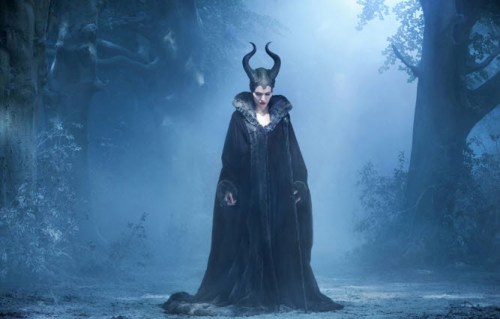
Whether it is waking up after being drugged or intoxicated to
discover someone you trusted had violated you while you were
unconscious–
feeling the physical difference in your body–or if
it’s the slow, agonizing realization (awakening) over months or years
that someone you loved and/or trusted had violated you in a more subtle,
socially acceptable (although still assault and no less damaging) way,
and all the confusion around that (
only 27% of survivors whose assault meets the legal definition of rape think of themselves as rape victims because certain forms of sexual assault have been so minimized and normalized in our rape culture), #
YesAllWomen can relate.
In that moment of realization, everything changes and nothing will ever be the same or really okay
ever again.
It wasn’t something you chose. It was something done to you. Something
stolen from you.
Here the film portrays a visual, powerful metaphor for a rape
survivor. Everything changes. Part of your identity has been stolen from
you. Your perception of reality–or your actual reality–had been
altered, perhaps irrevocably. You stumble away in confusion and
dissociation, just like Maleficent did, trying to make sense of this new
reality. Trying to process the betrayal, the inherent change in your
deepest being.
Maleficent’s
raison d’être was ripped from her. Her wings,
the part of her that enabled her to soar through life in joy, that gave
her life purpose in her community as protector, were violently ripped
from her.
For me, it was my ability to write and my sexuality that were stolen from me. My
raison d’être. My career. My identity. My most profound ability to experience joy and love in life.
My metaphorical wings had been ripped from me, too.
Maleficent’s bright, beautiful, magical world became dark and dead,
full of rage and confusion. The beautiful cinematography and effects
showed this visually, and we all felt it viscerally.
Her first goal was to find out “why,” as if it would change anything,
but understanding “why” is something inexplicably necessary and almost
always elusive. However, with the help of Diaval, a raven she saved from
certain death who becomes her shape-shifting confidant and ally,
Maleficent found out why: because Stefan’s selfish, entitled, narcissist
need for power and control were more important than anything or anyone
else.
In fact, that’s pretty much the “why” for most sexual (or any) violence, come to think of it.

She creates huge walls of thorns around the Moors in an attempt to
protect herself in a dangerous world she no longer understands, knowing
deep down she will never feel safe again. Then she takes a throne of her
own to rule the Moors, which is a metaphor for the necessity to feel in
control of everything, your entire world, after enduring something so
horrific through force. It’s the first thing any rape recovery counselor
or sexual assault attorney tells a survivor: you’re in control.
Then, to add even further insult to profound injury, she learns her
attacker (her rapist) announces the birth of his daughter in his happy
life with his happy wife in their sumptuous castle. This breaks her
completely. So many say what she does in response is revenge* or
vengeance*, but it’s not, it’s justice*.
Remember, King Henry who brought his injury on himself through his
own selfishness and greed? Well, Maleficent’s injury, nay–virtual
destruction, wasn’t her choice. It was done to her under the guise of
love and trust.
This is justice*. Balancing the scales. Her life was violently taken
from her, but her attacker gets to be powerful and adored and happy. He
needed to be held accountable for what he had done. He must answer for
his crimes and accept the consequences of his choices. Again, as is so
very often the case in our own world and communities, no one will step
up to ensure the perpetrator answers to his choices, so the burden falls
on the traumatized, often causing more trauma; however, doing nothing
is worse, so we shout into the darkness until one person listens…and
then another…and then another. We keep shouting until we can come back
into the light, protected by supporters and other survivors who say:
No More.

Some say she could’ve just killed Stefan, but that wouldn’t be
justice.* That would be relief.
Similar to the way Constance delivers
justice in
Avalon Revamped,
Maleficent ensures that Stefan will also live each day as
much confusion and fear as he inflicted upon her with his selfish,
violence actions by cursing his daughter.
Granted, the innocent child doesn’t deserve to be the target of
Maleficent’s rage, as she did nothing to harm Maleficent or anyone, but
this is where another powerful metaphor comes into play. As I mentioned
in my “
Hmmmm…Would I Accept an Apology? (A Rant)”
post, daughters of rapists and other such treacherous, abusive people,
are cursed. They are cursed by their father’s actions and by who he is.
This is what happens in
Maleficent, only through Maleficent’s will, which was itself created by Stefan’s violation and betrayal.
I won’t go into the psychology of brain development and developmental
trauma here, but it has been widely observed, generation after
generation, that children learn what relationships look like, how to
behave, and who to choose in romantic and sexual relationships based on
the examples of their caregivers, usually their parents. Before they can
even speak, they learn these things. For those raised in abusive and/or
dysfunctional situations, this inevitably turns into a constant search
for someone with whom they can play out and “fix” childhood issues and
trauma, albeit subconsciously. Little girls with scumbag daddies usually
end up with scumbag partners, for example. Over and over and over
again. Abused children, usually end up in abusive adult relationships,
either as the abuser or the victim. Over and over and over again.
Victims of assault often find themselves victimized again, not being
able to see the warning signs early enough because of previous trauma
and nervous system reorganization.
But I digress.
After having her purpose ripped from her, Maleficent must find a new
purpose for herself. Over the next sixteen years, we see Maleficent
watching over Aurora, even saving her life many times from the
incompetent pixies. Perhaps at first it is to ensure Aurora survives
long enough to fulfill the curse, but within a few years, as time heals
her wounds and quells her justified rage, Maleficent falls in love with
the child. Maleficent sees Aurora for the individual she is, not as an
extension of her father. Maleficent even tries to remove the curse, but
she can’t.
Stefan, on the other hand, under the guise of “protecting” his
daughter, sent her away to live in isolation, another metaphor for
patriarchal control (and what so often happens to rape survivors, self
included). When Aurora learns he’s her father, she rushes back to the
castle on her 16th birthday. Stefan, instead of, you know,
talking to her about what’s going on, gets angry that she’s a day early and locks her away.
Think, if he had just said, “By the way, Aurora, don’t touch any
needles before sunset, okay? If you do, you’ll fall into a deep,
deathlike sleep forever. Just a heads up.”
Honestly.
But, no. He has to
control his
property, so he
locks her away. Since she was raised to be an independent woman in the
isolation of the forest, and since the curse is driving her to find a
needle on which to prick her finger, she escapes and finds the pile of
spinning wheels King Stefan had supposedly destroyed sixteen years
prior. Before Maleficent can warn her, Aurora pricks her finger (which
in the original story was a metaphor for rape) and falls into her deep
sleep.
Maleficent weeps and doesn’t ask for forgiveness over Aurora’s
sleeping form, for she knows what she’s done to the girl can never be
erased by “I’m sorry,” (ahem, my point
here).
They tried to have the handsome, love-at-first-sight Prince Phillip
kiss Aurora, but it wonderfully didn’t work. The very reason Maleficent
included the clause of “True Love’s Kiss” is because she has learned,
through great personal sacrifice, that no such thing exists, or at least
not in the way we’ve been taught to believe.
In her grief and remorse and motherly love, Maleficent kisses Aurora
on the forehead. This awakens Sleeping Beauty. The true, unselfish love
between two people is perhaps the truest love of them all. Where they
love each other for who they are, not what they can get from the other,
whether that be sexual gratification or notoriety or arm candy or a
possession.
The beautiful simplicity when one soul recognizes the magical divinity of another.
 Maleficent’s
 love returns Aurora to herself, and Aurora’s
love enables Maleficent to become whole again. Aurora finds Maleficent’s
severed wings, which the narcissist King Stefan kept in a glass case
over which to preen or rage or whatever, and realizes what her father
had done. She returns the wings to Maleficent just in the nick of time,
and they reattach to Maleficent’s body. Whole once again, after sixteen
long years, she has regained her power through love and forgiveness and
kindness. She’s healed, as much as she can be after losing nearly two
decades of her life, and she’s done with this war.
King Stefan, however, doesn’t stop trying to get revenge* for his
perceived hurt, and even though Maleficent tries to walk away from him
and his life for good, he attacks her while her back is turned, like the
coward he is. They tumble off of the turret, but since she has her
wings again, she is able to save herself from death. Joyfully, King
Stefan isn’t saved. The fall ends his miserable, obsessed life of
self-induced torment.
When Aurora becomes queen, she unites the two realms, and they all
live in harmony. Prince Phillip returns, and they have a chance to
actually get to know each other and make a mutual decision whether or
not to be together, as individuals, rather than the stereotypical
perfect-happily-ever-after-narcissistic-bullshit-fantasy of love.
To summarize, Maleficent was a loving, trusting, beautiful soul who
was horrifically violated during a vulnerable moment by someone she
loved. This violation fractured her identity and her very soul. It
completely altered the way she saw the world. She then watched her
attacker become famous, loved, adored; and she knew there would be no
justice (and thereby no healing for her) unless she delivered it
herself. In contrast, where she had the clarity of a single, undeniable
violent act in one evening, my destruction took three separate,
confusing assaults and betrayals over a period of 18 months.
Like 73% of rape survivors, I didn’t see them for what they were for a long, long time. Now I do.
Still, this is why I identify with Maleficent. This is why I applaud my gifted name.
May you all find peace.
Read the full post at
caughtinthecogs


